The Dyslexia Debate
7 Replies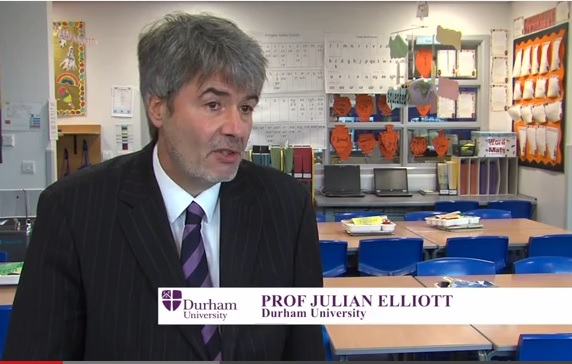
Professor Joe Elliott of Durham University in the UK is one of the authors of a soon-to-be-published book arguing that the diagnosis "dyslexia" is poorly-defined and not useful.
Pre-publicity for this book says that he and co-author Elena Grigorenko examine how reading difficulties are conceptualised and tackled, and discuss the latest research in cognitive science, genetics and neuroscience.
They argue that the interpretation of the term "dyslexia" often does a disservice to children, and that resources and effort currently put into diagnosing dyslexia would be much better put into improving early teaching, and making sure that all strugglers get the extra help they need.
This makes a lot of sense if you're thinking at a population level about how to improve all children's literacy skills in future. But what about current learners who have already tried to learn to read, and failed?
Little Learners Love Literacy books
2 Replies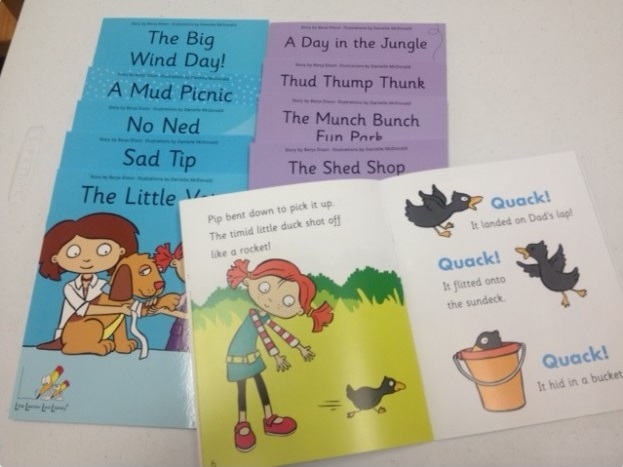
Maureen Pollard from Little Learners Love Literacy has just sent me two sets of her shiny new Stage Plus 4 and Stage 6 decodable readers. There are a few perks to this blogging caper after all.
Actually I checked through the drafts of these books for Maureen wearing my fernickety phoneme-grapheme correspondences hat a few weeks ago, so made a very minor, voluntary contribution to their production.
Great books for young beginners
I've been using these books with children in the first two years of school for a little over a year, and highly recommend them as exactly the kind of first books Aussie kids should be attempting to read independently.
They introduce just a few sounds and letters at a time, then gradually add more, allowing children to consolidate patterns without being overwhelmed by too many of them, or too much complexity (as often happens when high-frequency words and "real books" are the literacy starting point).
They have cute stories, attractive illustrations and helpful instructions for parents about how to use the book to help their children learn to read.
Free spelling book
2 Replies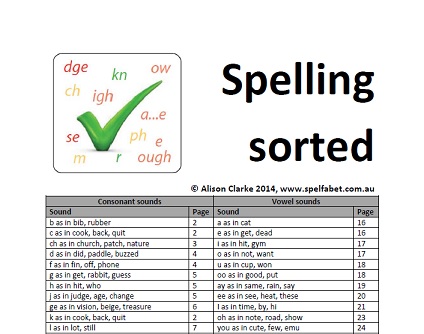
I’ve been trying to think of ways to help teachers organise their thinking about sounds and letters, and make teaching children about sounds and spellings seem interesting, finite and do-able.
Years ago I went through the whole dictionary and sorted it by sound (phoneme) and spelling pattern (grapheme), and made a spiral-bound booklet of spelling lists for myself called Spelling Sorted.
This put examples of every spelling pattern at my fingertips.
Showing learners the patterns
It let me confidently demonstrate to learners both the major patterns (like the “ai” in “rain”, “sail” and “maid”), and unusual ones (the “ai” in “said”, and also “again” and “against”, if you have an Australian accent like me).
It let me show learners how some spellings are shared by more than one sound, e.g. the “ou” in “shout”, “soup”, “country”, “soul”, “cough” and even “ouija” (incidentally, a word created by putting the French and German words for “yes” together).
It also helped me explain to learners that English spelling is complex because English is made up of words from many languages. For instance, the “ph” in “phone”, “elephant” and “alphabet” is usually in words that come from Greek, and the “é” in “café”, “paté” and rosé” is usually from French, and words with “ng” like “sing”, “long” and “hang” are usually Germanic-origin words brought into English very early by the Angles, Saxons, Jutes or Vikings.
The 100 most annoying words
1 Replies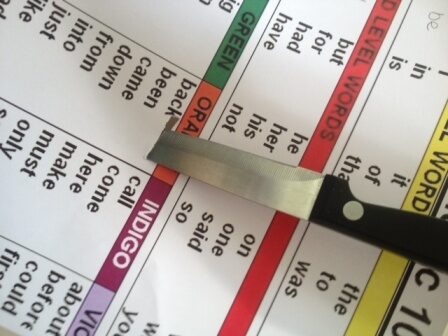
I’ve been working with a little girl in her second year of school who is taking a long time to understand sounds and letters, so I’ve scheduled some extra one-to-one time with her each week.
Last year, she had pretty much nailed the “short” vowels (“a” as in “hat”, “e” as in “red”, “i” as in “sit”, “o” as in “not” and “u” as in “fun”) in little, three-sound words. However, her responses were very slow, so I was hoping to get her faster and more automatic this term, before working on longer words and extra spellings next term.
Suddenly yesterday, whenever I asked her to write a word containing the “short” vowel sound “u”, she wrote “a”. I asked for “sun” and she wrote “san”, I asked for “duck” and she wrote “dack”, I asked for “nut” and she wrote “nat”. Argh. What happened?
The Golden Words
She has a really lovely teacher, who is also very concerned about her slow progress, and who mentioned in passing in the hallway that she’d sent home the “Golden Words” for the family to work on.
The “Golden Words” are the first 12 “sight” words in a high-frequency-words-based literacy scheme called the Magic 100 Words, which is popular in my local schools, and seems to be recommended to undergraduate teachers as their first literacy priority. The words are “a”, “and”, “be”, “I”, “in”, “is”, “it”, “of”, “that”, “the”, “to” and “was”.
So that’s what happened. The child has been practicing reading the word “a” as “uh”, and now she sees the letter “a” in a word and says “uh” too. “Uh” as in “drat”.
I’m sure once I have a chance to discuss this with the teacher and send home some different things to practice, this student will be back on track. However, it would be great if teachers graduated with something less confusing as their early literacy starting point. Think about what sounds the letter “a” represents just in the 12 “Golden Words” above. There are three different sounds – “uh” as in the word “a” (I wish people would say “ay” – click here for an earlier blog post about this), “a” as in “that” and “o” as in “was”. Totally, totally confusing for beginners.
The 100 Most Annoying Words
The mother of another young client told me the other day that they have started calling the 100 most frequent words “The 100 Most Annoying Words”. I think this is brilliant and will be calling all high-frequency word list this from now on.
I count a total of 74 different letter-sound correspondences in the Magic 100 Most Annoying Words:
Spelling Latin endings
10 Replies
Words with Latin endings can be confusing to spell. To get a handle on them, I like to organise them into groups:
“sh” sound Latin endings
- Many, many words have the sound “sh” spelt “ti” as in “action”, “cautious” and “patient”.
- Some others are spelt with “ci” as in “special”, “magician” and “vicious”.
- A third group are spelt with “si” as n “mansion”, “tension” and “extension”.
- A fourth group are spelt with “ssi” as in “mission”, “passion” and “discussion”.
Some spelling reformers would have us spell all these words with “sh” – “acshon”, “speshal”, “manshon”, “mishon” etc, like rappers do. But I hope this table makes their current spellings seem more logical:
 The Spelfabet shop has affordable, downloadable spelling teaching resources.