Phonemes are sounds AND articulatory gestures
21 Replies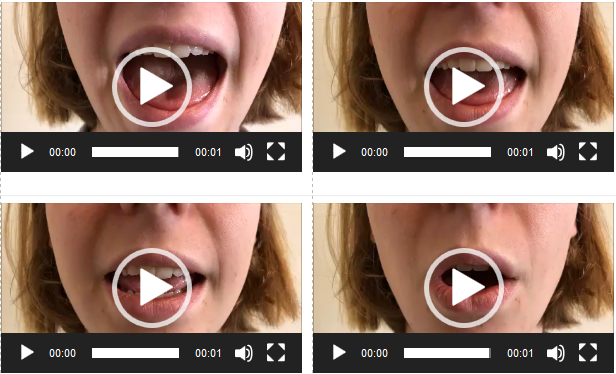
Phonemes are perceptually distinct speech sounds that distinguish one word from another, e.g. the “p”, “b”, “t” and “d” in “pie”, “by”, “tie” and “die”. They’re also articulatory gestures.
A 2009 article co-authored by reading guru Linnea Ehri says “awareness of articulatory gestures facilitates the activation of graphophonemic connections that helps children identify written words and secure them in memory.” Melbourne Speech Pathologist Helen Botham (Hi, Helen!), lists a number of references on her Cued Articulation website indicating articulatory awareness facilitates phonemic awareness.
I sit right across the table from my clients, so we can see and hear each other’s articulation well. It must be a lot harder to teach a whole class about phonemes, in order to link them to graphemes. Videos on the internet (including my own) about phonemes seem to put them all in one video, making them hard to isolate and repeat on a classroom interactive whiteboard.
I’ve thus filmed my utterly adorable and orthodontically photogenic niece Vivien (thanks, Vivien!) saying each phoneme separately. The 44 videos are below, each with example words which link to the relevant spelling lists on my website. (more…)
What is an authentic text?
0 Replies
In linguistics and education, an “authentic text” is a text written for any purpose other than teaching/learning about language.
The word “authentic” doesn’t have its usual meaning in this context, nor its pejorative opposite “inauthentic”. It’s not a value-judgement.
The opposite of an authentic text is a text written for the purpose of language-teaching. This is a valid reason to write a text.
Authentic texts thus aren’t superior to language-teaching texts, they just serve a different purpose. (more…)
What is a decodable book?
19 Replies
A decodable book is a book for a beginning or struggling reader which contains words she or he can sound out.
In practice this means it contains sound-letter relationships and word types its reader has been taught. It doesn’t include patterns not yet taught.
Decodability thus describes how well a book/text matches its reader’s decoding skills. It gives us a proper, objective way of identifying a just-right book, by ensuring lesson-to-text match. (more…)
 The Spelfabet shop has affordable, downloadable spelling teaching resources.