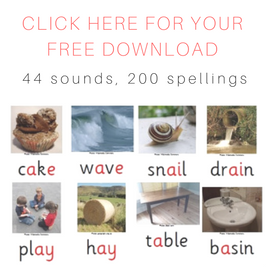
PETAA’s Authentic Texts to Support Teaching Phonics
9 Replies
The Primary English Teaching Association of Australia has produced a new, downloadable list of Authentic Texts To Support Teaching Phonics, which:
“…maps examples of rich authentic texts to the Federal Government’s Literacy Hub phonics progression, which presents a structured sequence of letter–sound correspondences and phonics skills for development across Foundation to Year 2. This free download provides early years teachers around Australia with a quality text list for teacher read alouds that support the phonics instruction that they’ve done that day/week.”
The guide is a downloadable spreadsheet listing phonics targets and books to support them. Here’s a screenshot of how it starts:

I’m so happy that PETAA recognises ‘Systematic, direct and explicit teaching of phonemic awareness and phonics is more likely to result in successful literacy outcomes’, so I was keen to see what kind of books they recommend to support this teaching. I popped into my local kids’ bookshop and bought three of the first six titles on their list.
PETAA recommends these books to support teaching of the the earliest sound-letter relationships in the Literacy Hub phonics teaching sequence, which I write as s/snake, a/apple, t/tiger, p/penguin, i/insect and n/noodles (AKA satpin, I use the reference words from our Embedded Picture Mnemonics, which help little kids remember sound-letter links). These are the first sound-letter relationships taught to five-year-olds in VC and CVC words (V=vowel, C=consonant) in this teaching sequence, and several others. Children are also taught four high-frequency words in this Phase: ‘is’, ‘a’, ‘I’ and ‘the’.
I did some word counts so I could figure out how many words a child taught these phonics and high-frequency word targets should be able to read in each of the three books I bought.
Hedgehog or Echidna?
- 573 total words
- 11 Decodable VC words (2 X ‘at’, 3 X ‘it’, and 6 X ‘in’)
- 0 decodable CVC words
- 57 pre-taught high-frequency words: 57 (14 X ‘is’, 19 X ‘a’, 12 X ‘I’, 12 X ‘the’).
Turbo Turtle
- 973 total words
- 31 decodable VC words (9 X ‘at’, 1 X ‘an’, 10 X ‘it’, 11 X ‘in’)
- 0 decodable CVC words
- 71 pre-taught high-frequency words (5 X ‘is’, 17 X ‘a’, 2 X “I”, 47 ‘the’).
Give me some Space!
- 1007 total words
- 47 decodable VC words (5 X ‘at’, 8 X ‘an’, 11 X ‘it’, 23 X ‘in’)
- 0 decodable CVC words
- 88 pre-taught high-frequency words (18 X ‘is’, 17 X ‘a’, 8 X “I”, 45 X ‘the’).
The only readable words in these books for the target beginners are prepositions, pronouns, articles and auxiliary verbs, i.e. unstressed function words that glue sentences together, but don’t mean much on their own. Interrupting a rollicking story to allow children to read such words just seems tedious and confusing.
A young child focussing on a storybook’s print (which young kids are disinclined to do) and thinking about phonics, rather than looking at the pictures and listening to the story, will be able to see lots of letters ‘s’, ‘a’, ‘t’, ‘p’, ‘i’ and ‘n’ in any book. But can they connect these letters to sounds in spoken words at story pace? When nobody is pointing to each word as it’s read? Srsly?
Stopping a good story to talk about phonics seems more likely to annoy children than help them, but anyway, let’s keep thinking about this. The PETAA list of Authentic texts to support teaching phonics includes example words which illustrate letter-sound relationships. Here’s a screenshot of the list for teaching about s/snake, a/apple, t/tiger, p/penguin, i/insect and n/noodles (in that order):

As you can see, the list includes s/scent, a/astronomical, a/gravity, a/intergalactic, t/turbo-charged, t/nectar, i/cylindrical, i/familiar, p/palomino, p/pinto, and n/nectar again. Interrupting a good story to talk about a letter-sound relationship in a probably-unfamiliar and/or polysyllabic word? Hmm. Not likely to win anyone Most Favoured Teacher Status.

You might have also noticed ‘a/astronauting’ on the list, which the Macquarie Dictionary says is not a real word. The list also suggests that a/after is pronounced like a/apple in Australian English (it’s not), that there’s a t/tiger sound in ‘clutched’* (there isn’t), and that we say/hear an i/insect sound in the second, unstressed syllables of ‘rabbit’ and ‘hermit’ (nope, it’s a schwa).
Teachers should read great storybooks aloud to little kids to boost their oral language skills and share knowledge and enjoyment.
They should give little kids decodable text so they can practise the skills taught in phonics lessons.
There’s no need to mix up these two very different types of books.

* If you’ve studied phonology, you’ll know that the sound /ch/ starts off as /t/ and is released as /sh/, so technically it does contain a /t/ sound, but that’s slicing it too finely for children. For them, ‘tch’ is just the main way we spell /ch/ after a ‘short’ or ‘checked’ vowel, as in batch, fetch, itch, scotch, hutch. You can see what the Macquarie Dictionary says about the pronunciation of ‘clutch’ at right.
Decodables: you can’t judge a book by its cover
6 RepliesMany mainstream educational publishers have recently started marketing decodable books, to meet fast-growing demand for phonics practice texts. Having bought and examined hundreds of these books, I’m excited by how many good options are now available. Here are photos of books we have at the Spelfabet office:
In general, publishers who produced decodables before there was a lucrative market for them tend to offer better phonics practice/lesson-to-text matching than less experienced publishers. However, all major publishers now seem to recognise that kids need to be taught to decode words, not guess and memorise them.
One problem with the term ‘decodable’ is that a book containing lots of sentences like “A dog is in the mud” and “Tim did not sit the dog in the tub” can be decoded by many young learners, but may not offer much practice of the book’s stated phonics targets. Just as an example, the new Flying Start to Literacy Decodables Unit 3 states its phonics targets as ‘b’, ‘j’, ‘q’, ‘v’, ‘w’, ‘x’ and ‘y’. The letter ‘j’ appears in three of the ten books (in a total of four words, as ‘job’ appears twice), ‘v’ appears in only two words (‘van’ once and ‘vet’ eight times), and ‘q’ doesn’t appear in any words at all.
It’s hard to write high-quality decodable text including low-frequency targets – there simply aren’t a lot of CVC words containing ‘j’ and ‘v’. I’d still argue that more words like ‘jam’, ‘jab’, ‘jog’, ‘jet’, ‘jig’, ‘jot’, ‘jut’, ‘Jed’, ‘Jan’, and/or ‘vat’ and perhaps some clipped words like ‘vac’, ‘Ev’, ‘Viv’, ‘Bev’ or ‘Kev’ would have improved a book targeting ‘j’ and ‘v’. I don’t know why ‘q’ is listed as a target.
Busy teachers should be able to judge a book by its cover, and not have to check whether the targets listed on books’ covers are in multiple words in the books.
I also wondered about similarities between some of the new Flying Start decodables and existing books from the same publisher. Here’s a photo of six of the covers of Unit 6 Flying Start to Literacy decodables:

Here are covers of other texts from the same publisher. The pictures on them appear in the above decodables.

It’s hard to write high-quality decodables, let alone write them to match illustrations from an existing book. ‘Dad’ in the new decodable ‘At Our Farm’ looks quite old to have such a young son (yes, I know Charlie Chaplin’s youngest child was born when he was 73). Being an Australian dairy farmer’s daughter, I wondered about the dairy, calf shed and hay shed all being called ‘barns’, not a term I’ve known Aussie farmers to use. Real farmers’ kids will also scratch their heads at a photo of the ‘farmer’s son’ offering grain to a calf that looks far too young to consume anything but milk.
Please check out decodables before you spend a lot of money on them. Read a few from each level, and consider how well they match your phonics teaching sequence. Think about whether they make sense, and offer value for money. A single book can cost anywhere between $2.70 (yay the Pocket Rockets by Berys from Moonee Ponds!) and about $13. If getting printables, don’t forget to include printing and collating materials and time in your cost calculations. Consider whether relevant training and other matching teaching resources are available, their cost and quality.
The last of the 2024 Spelfabet decodable book workshops aren’t going ahead due to caseload pressures and low enrolments, but if you want a tailored session to help you choose books for a specific person or purpose, please contact admin@spelfabet.com.au.
Choosing a phonics sequence & decodable books
13 Replies
Phonics teaching sequences give an outline of which sound-spelling relationships are to be taught, and in what order. Most of them also include work on word-building with prefixes and suffixes. Schools in my state (Victoria, Australia) without a phonics teaching sequence must choose one this year, thanks to the Making Best Practice Common Practice announcement (applause).
A good phonics sequence works from simple to complex, separating similar sounds/spellings (like b/d), and targeting high-impact patterns first. Ideally, there are matching, high-quality teaching materials, and excellent training and support, readily available at a reasonable price.
Decodable texts allow children to practise what they’ve been taught in phonics lessons, without being tripped up by a whole lot of harder spellings. What we practise, we learn. The type of reading material given to young children can have at least as big an impact on their reading habits as what they’re taught in class (see this article, or this book), so decodable texts must be chosen carefully and wisely. This blog post aims to help with this decision-making.
Things supplier websites won’t tell you
Supplier websites provide lots of great information about decodables, but don’t say that some books offer limited opportunities to practise some targets, or include words that are quite hard for their intended readership. The ERA Books Phonics Decodables 1.0 and 1.1 Set 4 books ($8.95 each, so $35.80 for all 4) list ‘k’, ‘h’, ‘f’, ‘l’ and ‘j’ as letter-sound targets. The words suitable for absolute beginners in these four books are: ‘Kim’, ‘Kip’, ‘kid’, ‘him’, ‘had’, ‘hen’, ‘hug’, ‘hat’, ‘fit’, ‘fun’, ‘fed’, ‘lid’, ‘log’, ‘Jim’, ‘jam’, ‘jug’, and ‘jet’ (17 unique words, 44 total words). Some other words also contain the targets, but in difficult-for-beginners CVCC, CVCC, CCVCC or CVCCC* words: ‘help’, ‘frog’, ‘fits’, ‘lift’, ‘just’, ‘sink’, ‘help’, ‘milk’, ‘flips’, ‘lifts’, ‘jumps’ and ‘like’.
The Sunshine Decodables Series 1 Set 3 book “Mud fun” lists the following targets on its back cover: ‘c’, ‘k’, ‘ck’, ‘j’, ‘qu’, ‘v’, ‘w’, ‘y’, ‘z’, ‘zz’, ‘ff’, ‘ll’, and ‘ss’. The only words containing these spellings I can find in the book are: ‘van’, ‘will’, ‘job’, ‘off’, ‘wets’, ‘wax’, and ‘kids’. No ‘c’, ‘ck’, ‘qu’, ‘y’, ‘z’, ‘zz’, or ‘ss’ words. The only ‘y’ words I can find in all ten Set 3 books are: ‘yes’ (two instances), and ‘yum’ (one instance). I wonder why they couldn’t work ‘yam’, ‘yap’, ‘yell’, ‘yet’ and ‘yuck’ in too. Writing good decodable books is hard work, and everyone who attempts it deserves some credit, but (call me old-fashioned) the phonics targets listed on the back of a book should actually be in that book, and in more than one or two words.
Free decodable book evaluation form
I’ve made a free decodable book evaluation form which I use in the 45 minute video below to evaluate a few of the many books which follow the Letters and Sounds phonics teaching sequence. This sequence was published by the UK government in 2007. I hope the form and video are useful to anyone feeling baffled by the confusopoly of decodable books now available, and needing a system to help them find lovely books that help their learners thrive. Sorry it’s quite a long video. If you’re time-poor and fairly familiar with the topic, crank up the speed using the little cog at bottom right, then just switch it back to normal speed for the most interesting bits. Making people sound like chipmunks also adds a bit of fun to the day.
Here are some examples of early years phonics teaching sequences, with links to matching decodable books and training providers. There’s no such thing as a perfect sequence, so please explore a variety of them, and related teaching materials and training, before choosing. Inclusion in this table does not constitute endorsement.
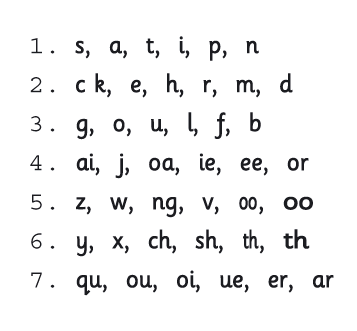
If you have a mixture of decodable books from various publishers/sequences, the NSW SPELD decodable book selectors can help you organise them into your preferred sequence. There’s also a free video training called Implementing a Systematic Synthetic Phonics approach on the government-funded Literacy Hub website, which has its own phonics sequence, but no decodable texts. Jocelyn Seamer runs early years phonics training and has program-agnostic resources. Free recordings of 2018 Victorian Dept of Ed webinars on synthetic phonics and related topics are also still available. The Five from Five website is also an amazing resource.
I hope all this is helpful to people choosing a phonics teaching sequence. I’m running small, hands-on workshops where you can have a Proper Look at a range of decodable books at the Spelfabet office in North Fitzroy this term, and try out my evaluation form on some (here’s the link to it again). Sorry it’s taken a while to get the workshops off the ground (life keeps thwacking me). Tickets to the sessions are not yet all in the website shop because of software glitches, but they will be by the end of the week.
Alison Clarke
PS The Spelfabet shop doesn’t sell decodable books suitable for absolute beginners, but has beginners’ quizzes, and Phonics with Feeling download-and-print decodables for kids in their second and third years of school (or later Foundation students). Also embedded picture mnemonics to help tinies learn basic sound-letter relationships, that two letters can represent a sound (sh/shell, oo/food), and that some sounds have shared spellings e.g. u/up (or u/undies, if you prefer) and u/unicorn.
* C = consonant, V = vowel. VC words include ‘in’, ‘at’ and ‘up. CVC words include ‘hot’, ‘sun’ and ‘fed’. CVCC words include ‘milk’, ‘help’ and ‘just’. CCVC words include ‘stop’, ‘from’, and ‘bent’. CCVCC words include ‘flips’, ‘trend’ and ‘stamp’. CVCCC words include ‘jumps’, ‘lifts’ and ‘grabs’. Please start beginners off with just VC and CVC words.
** Sounds-Write now has Australian and US branches.
25 minutes a day in F-2 so everyone can read!
7 Replies
Melbourne newspaper The Age is holding its Schools Summit, you can find their blog about this here.
The big announcement from this summit is that explicit teaching of systematic, synthetic phonics in the first three years of school will be required of all Victorian schools from 2025. Here’s a screenshot from the Premier’s media release entitled “Making best practice common practice in the Education State”:

An article The way children are taught to read in Victoria is about to change provides more detail, but it’s pay-walled if you’re not an Age subscriber. If you are, please make time to leave a comment. Here’s mine:

Kudos to Education Minister Ben Carroll for learning about reading research, and acting on it. Everyone in education and beyond will benefit when all children are taught to read and write in the most effective, efficient way, especially children from disadvantaged backgrounds.
A win for kids and teachers
This announcement must be implemented in a pro-teacher way, recognising the yawning gap in language knowledge in most teacher preparation degrees, and the vast amount of work so many teachers have done in their own time to upskill themselves and others, and get us to this point (yes, Sharing Best Practice, Reading Science In Schools, TFE, SPELDs, LDA, SOTLA, Berys Dixon and Maureen Pollard, I’m looking at you).
This decision should give early years teachers faster success teaching all children to read and write, especially those who struggle. It should reduce later years teachers’ differentiation workloads. Fewer parents will have to spend money on intervention outside school. Fewer kids whose parents can’t afford intervention will miss out on quality teaching about our complex writing system. More success for all means better behaviour and less class disruption. This announcement should help block the school-to-prison pipeline.
I’ve been doing little happy dances about the announcement all morning, but this is only the beginning. The hard work of implementation starts now.
Helping schools choose quality phonics practice texts
Practice makes permanent, so schools need to choose high-quality, good-value phonics practice texts, and make them available to all F-2 children. Our North Fitzroy office is about the only place in Victoria where a wide range of decodable books suitable for F-2 are on display. Next term, I’ll be running small (up to 12 people) three-hour workshops about them on Wednesdays and Thursdays after school, and fortnightly on Saturdays.
There are also a couple of 22nd June workshops for people needing urgent help getting value for EOFY unspent cash, and some workshops for interventionists, librarians, adult educators and parents. I hope this is a useful way to support implementation of this important announcement, and ensure children are given quality phonics practice texts, and Victorians’ money is spent wisely. All the dates and times are on the workshops page, where tickets will be available soon.
Let’s set kids up for success
Finally, I’ve been thinking about the article “The way we teach most children to read sets them up to fail” Prof Pamela Snow and I co-wrote in the Conversation in 2015. Let’s hope everyone in the education system can now work together to ensure all children are taught to read in a way that sets them up for success.
Alison Clarke
Workshops comparing decodable books
20 Replies
Schools everywhere are replacing their predictable/repetitive texts for beginners/strugglers with decodable texts. Excellent. Kids need to practice decoding words, not guessing or rote-memorising them.
There’s been a recent market explosion of decodable books. I’ve just updated my website list, and discovered that the Reading League in the US has an even bigger list. My head is spinning. It would be very sad if people spent a lot of money on well-marketed, pretty, but pedagogically low-quality ones, then tried them out, didn’t like them, and went back to predictable/repetitive texts.
I’d like to be able to write a blog post giving my full and frank opinions about the range of decodables we have in the Spelfabet office. Well, maybe not the ones we keep at the bottom of the back cupboard. Unfortunately, we live in a litigious world, so I’d have to check such a blog post with a lawyer first.
However, I can invite locals to small workshops to have a Proper Look at these books, and discuss their features, advantages and disadvantages. After so much online learning and online shopping, that’d be a nice thing to do.
We’ve almost finished setting up our display of decodable books suitable for early years children in our workshops room, see photo above. My excellent colleagues Georgina Ryan and Elle Holloway have spent many hours preparing information sheets about each set of books, and I’m just finishing the task off.
I’ll be running a two-hour in-person, hands-on session about this display on Wednesday 22nd May from 1.30pm till 3.30pm, and more will be scheduled soon. Numbers are strictly limited to 20 people per session. If you work at a City of Yarra, Merri-Bek or Darebin school or local library (our local patch) please email info@spelfabet.com.au from your work address with the name of your school for a 50% discount code. Click here for a ticket.
We don’t have every available decodable book series, or full sets of every series, but once we’ve added a few new things, our early years display will include texts from:
- The Adventures of Doc Leeda (High Noon Books, US)
- Big Cat Phonics Practice, Big Cat Phonics for Letters and Sounds (Collins, UK)
- Bug Club/Phonics Bug (Pearson, UK)
- Core Knowledge Language Arts readers (free printables, US)
- Cracking the ABC Code (Aus).
- Dandelion Launchers, Readers and World (nonfiction) books (Phonic Books, UK and US)
- Decodable Jewels (Aus)
- Decodable Readers Australia (Early Readers, Main Fiction, nonfiction, Aus)
- Dog on a Log (Let’s Go Books, US)
- ERA Phonics Decodables (Aus)
- Flyleaf Emergent Reader Series and Reading Series, (US)
- Get Reading Right (Aus)
- InitiaLit readers (Multilit, Aus)
- Jolly Phonics (Jolly Learning, UK)
- Junior Learning Letters and Sounds sequence books (UK)
- Little Learners Love Literacy Pip and Tim, Wiz Kids, Tam and Pat and Big World (nonfiction) books
- Little Sprouts (High Noon books, US)
- Mog and Gom (Smart Kids, Aus? UK?)
- Phonics With Feeling (printable decodables, available from this website, Aus)
- PLD Literacy (other publishers’ books reorganised into PLD teaching sequence, Aus)
- Pocket Rockets (Smart Kids, Aus)
- Preschool University (printable decodables, US)
- Reading Elephant (download-and-print stories, US)
- Power Readers and Supercharged Readers (Voyager Sopris, US)
- Reading Mates (Aus)
- Reading Stars (Ransom, UK)
- Rip Rap Club (Cumquatmay, Aus)
- Rising Stars Reading Planet (Hodder, UK)
- Simple Words books (US)
- SmartKids Decodable Fiction Collection (Aus? UK?)
- Snappy Sounds (Macmillan, Aus)
- Sound Waves (Firefly Press, Aus)
- Sounds Write (UK)
- SPELD SA Phonic book series for Jolly Phonics sequence and Sounds-Write sequence (Aus)
- Sunshine books – Decodable series (Aus)
- UFLI Foundations (US)
- Whole Phonics (US)
We also have the No Nonsense Phonics kit (UK) and iPads with decodable books as apps, and a projector to show you a few cool online things, like the new Reading Doctor decodable texts (hilarious pictures are on the following page, so you CAN’T guess from them!). Please note that the workshops will be about decodable books for youngsters, not older, catch-up readers (8+ years to adult). We’ll need another whole session or two to discuss them. Let us know if that’s of interest.
If you’re local and want to attend, but can’t do so on Wednesday afternoons, let us know when would suit you at info@spelfabet.com.au. You might also like to try the Decodable Book Selectors from NSW SPELD.
Alison Clarke
Speech Pathologist
Shallow and deep phonics
18 Replies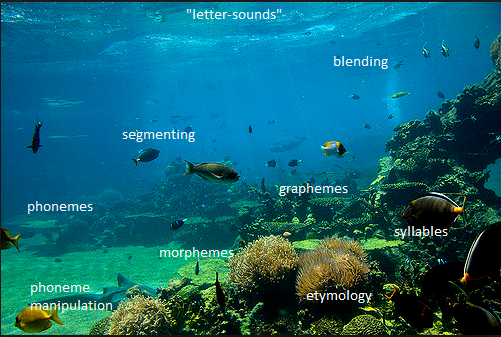
My last blog post copped a little flak for its focus on the Victorian Education Department’s top two pieces of advice for parents when their children are stuck reading a word, both of which start with the sentence, “Look at the picture.” (see p14 of this document).
This is very bad advice because it directs children’s attention away from the key information required for good word-level reading. It’s based on the idea of multi-cueing/the three-cueing system, which is scientifically-debunked nonsense. A complex but excellent explanation of why can be found here, and the actual role of context in reading is explained well here.
To read an unfamiliar word, children need to take it apart into spellings (graphemes) e.g. “n”, “igh” and “t”, not “ni”, “g” and “ht”, associate these with the relevant speech sounds (phonemes) and blend them into a word. With practice, familiar words are unitised in memory, via a process called orthographic mapping, and no longer need to be sounded out, they become instantly recognised.
Unfamiliar words of more than one syllable must be sounded out a syllable at a time. Earlier syllables must be held in memory while later syllables are worked out, making long words harder.
Once a printed word is converted into a spoken word, its meaning can be accessed, if it’s known. But even if a child doesn’t yet know what a word means (i.e. it’s not yet in their semantic memory), having heard it before (i.e. having it in their phonological memory) kick-starts the process of putting it into long-term memory for instant recognition. Over time the child can learn and refine its meaning(s), and how to use it, by hearing and seeing it in use. (more…)
Decodable texts and lesson-to-text match
11 Replies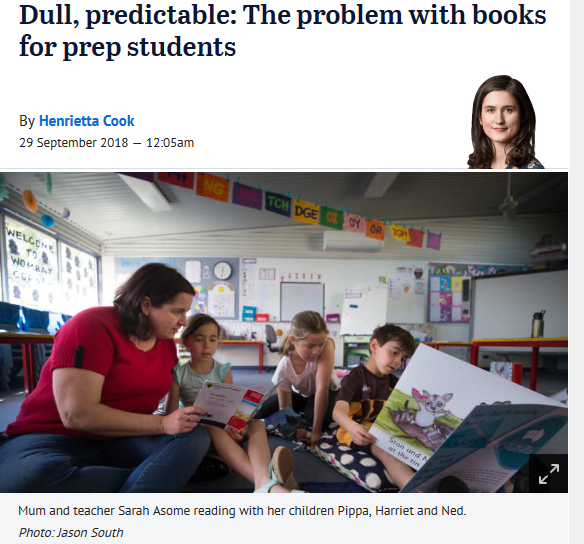
A state election looms here in Victoria, and parent-run group Dyslexia Victoria Support (DVS) is petitioning politicians to provide decodable books to all kids starting school in 2019.
Decodable books provide the reading practice for phonics lessons. They include sound-letter relationships and word types learners have been taught, plus usually a few high-frequency words with harder spellings needed to make the book make sense, which are also pre-taught.
Decodable books would replace the widely-used predictable/repetitive texts, which encourage children to guess and memorise words, not sound them out.
At the moment, children might be learning about “i” as in “sit” in phonics lessons, but take home a predictable text that might contain words like “find”, “ski”, “shield”, “bird”, “friend” or “view”. Instead of helping kids practise the sound-letter relationships they’ve been taught, their home readers can undermine this teaching.
DVS’s campaign hit the statewide media this weekend, yay, with an article called “Dull, predictable: the problem with books for prep students” in Fairfax newspapers.
 The Spelfabet shop has affordable, downloadable spelling teaching resources.